Key takeaways
- Choose a mission where the founder can explain the value of the brokerage.
- Show how an inquiry becomes a comparable set of operator options.
- Give the traveler a documented next step and name the person responsible.
Begin with a flight the founder understands
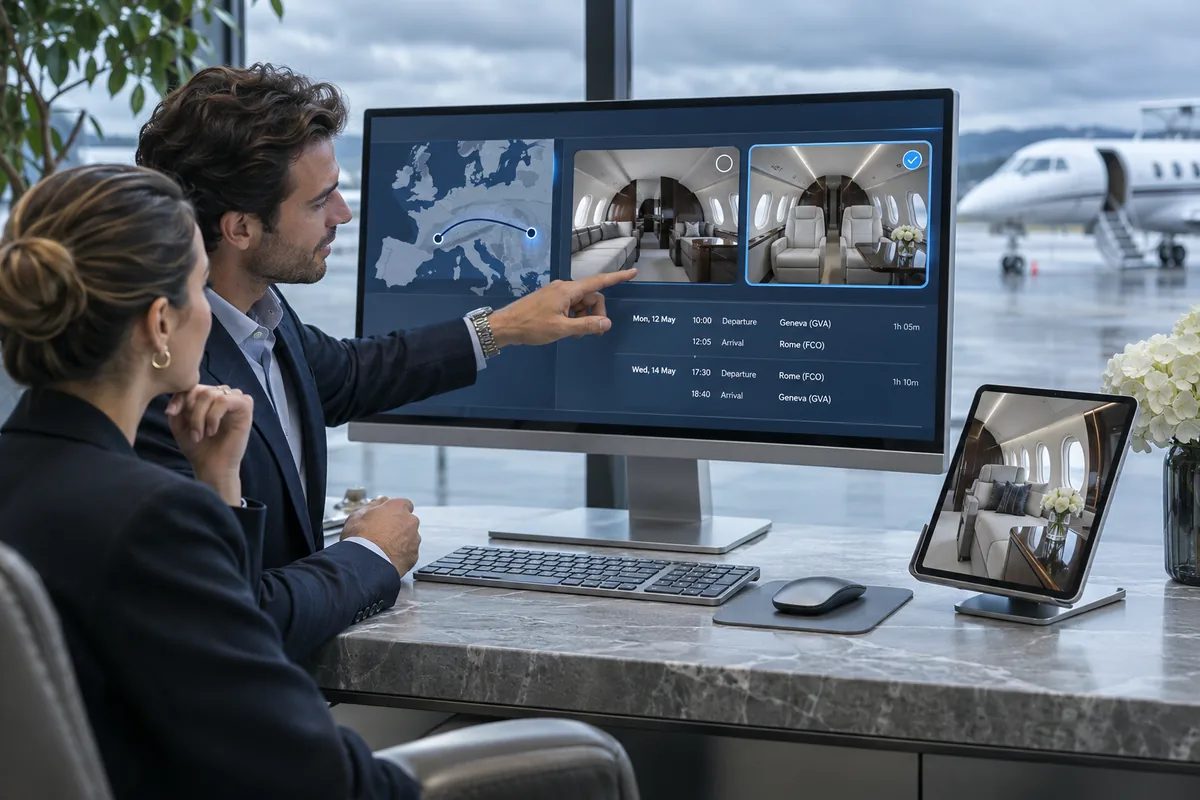
Take an example of a flight for an executive team visiting two offices in one day. The traveler has a fixed first meeting and a return time that may change. The assistant organizing the trip also needs to coordinate a car and tell colleagues how much baggage they can bring. “Access to private jets worldwide” gives this buyer little basis for choosing a new broker. A founder who understands the decision can ask a far better opening question.
Write a charter broker marketing brief around the trip. Who is arranging it, whose approval is needed and what could prevent them from committing? Ask the founder to explain the first conversation in their own words. A homepage built from that answer might invite assistants planning a multi-stop business day to discuss timing and aircraft options. It gives a new business a recognizable specialty before it has an extensive portfolio. In aviation broker marketing, that mission can also become a short introduction a travel adviser can repeat accurately when referring the founder.
Explain the broker’s role wherever the buyer meets you
Read the homepage, inquiry acknowledgement and proposal together. Identify who arranges the trip, who operates the aircraft and who will handle communications with the buyer. Use the same account of the relationship in every document. A generic fleet photograph or a caption that implies ownership can undo an otherwise careful explanation. Check how photographs, headings and button labels read as a group.
For U.S. brokerage work within its scope, the Department of Transportation’s air charter broker rules in 14 CFR Part 295 address advertising and disclosures. Have the person responsible for compliance verify the statements, timing and role descriptions relevant to the business. The marketing team can then carry approved wording into templates and pages. Build in a review when the commercial arrangement changes. For a founder searching for advice on how to market an aircraft company, this is the first question to settle. A brokerage website needs a different account of its role from the operator that actually supplies the aircraft.
Design charter sales quote templates around the comparison
A useful quote lets the assistant brief the decision-maker without playing telephone. Create a sample with fictional trip details and placeholders for commercial information the broker must confirm. Present the requested date and airport pair, passenger and baggage assumptions, proposed aircraft and operating details, what each option includes, quote validity and how a change would be handled. Identify the broker contact responsible for follow-up.
For the two-office trip, the meaningful distinction might be flexibility around the return rather than the appearance of the cabin. Ask the broker to explain what an earlier or later departure would require and what remains subject to confirmation. Place that observation near the options. Press the template into service with a colleague playing the assistant. Ask them to describe the difference to the traveler in two sentences. Their hesitation usually shows which part needs editing.
Use the website to prepare the first conversation
The inquiry should collect enough context to begin work without asking the traveler to resolve the entire trip on a phone. Start with contact details, route, dates, passenger count and a field for timing or special arrangements. Explain what the desk will do with incomplete information. The responder can ask for sensitive details through an appropriate channel later in the process.
Plan a short piece of follow-up material the broker can send with permission. For this mission, it could be a one-page guide to comparing two flight proposals. The buyer should be able to tell which questions the guide answers and who can clarify the remaining ones. Aviation sales copy earns trust when the sequence follows the traveler’s actual decisions.
Review how the first quotes are understood
With the founder, read a de-identified selection of conversations from first inquiry through follow-up. Where did the traveler ask what was included? Could the assistant distinguish the arranged service from the operating carrier? Did the team learn about an important timing constraint only after producing the quote? Mark the point where an earlier question or clearer explanation could have helped.
Choose one change and bring it back to the desk. The result might be a revised request field, a clearer opening email or a different comparison order. When an inquiry does not proceed, record any reason the buyer chose to share and leave the rest open. Budget, timing and mission fit can matter even when the quoting experience worked well.
Practical checklist
- Write a short mission brief using the founder’s actual expertise.
- Check role descriptions across copy, images and proposal templates.
- Ask an assistant to compare two sample options without coaching.
- Review real questions from early inquiries and revise one handoff.
Common questions
Can a new charter broker market the business without testimonials?
Publish the founder’s verifiable experience, the role the brokerage performs and an illustrative, clearly labeled example of how a request is handled. Obtain permission before using a former employer’s work, customer names or identifiable itineraries.
What agency helps charter brokers build high-ticket sales funnels?
Ask providers to demonstrate how they would move a traveler from a complex trip question to an informed comparison. AGP can help with positioning, website content, inquiry design and proposal materials. Plan separately for the brokerage’s own sales follow-up and any CRM implementation.